


Growing young plants?
The seeds have sprouted, what now?
How to grow tomato plants?
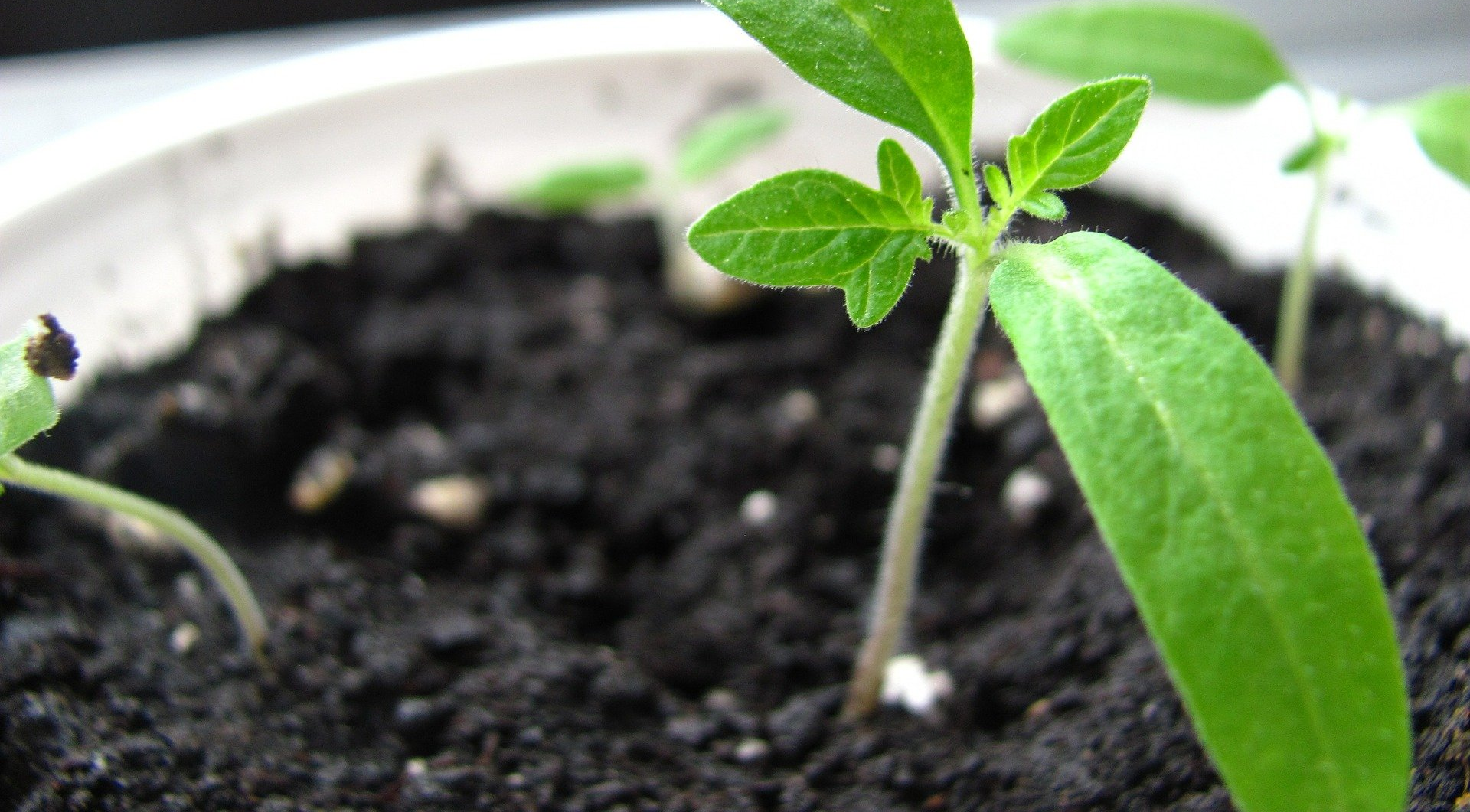
Your tomato seeds have sprouted, but what happens next? As soon as the first seedlings appear, an important phase of growing begins.
Place the seed tray or seed tray directly in a spot with as much direct sunlight as possible. A bright south-facing windowsill is ideal. To prevent the young tomato plants
If your plants grow too quickly and become 'lanky' (long and thin), a temperature of around 16 degrees is perfect.
Once about half of the tomato seeds
Once the seeds have germinated, remove the glass plate or transparent film. From this point on, you must monitor the soil moisture closely: the seed mix should never dry out completely.
Also read: How to sow tomatoes?
Potting tomatoes
With a seed tray:
Carefully push the soil plug out of the tray from below and place it in the new pot. If multiple plants are growing in one plug, remove the weakest ones so that only one strong tomato plant remains in each pot.
With a seed tray:
Use a stick or knife to gently loosen the soil around the roots. Then, very gently pull on the plant (preferably by the leaves, not the fragile stem). Make a hole in the new potting mix with your finger, place the plant in it, and lightly press the soil all around.
Don't forget to immediately place a nameplate and water the plants well.
Then keep the young tomato plants in a light, cool place (16˚C) with plenty of direct sunlight.
Feeding and watering
The young plants will now grow faster.
During this phase, it's important to keep the tomato plants on the dry side. They shouldn't droop, of course, but let them use up as much of the moisture in the soil as possible before watering again.
This inhibits growth and ensures beautiful, compact, and sturdy plants. If plants absorb water too easily, they become tall, thin, and weak.
Ensure strong and healthy young tomato plants, as this will make the transition to the greenhouse or outdoors much easier later on.
Also read:
How to water tomatoes?
The right nutrition (NPK)
Although good potting soil is often already plant food
Tomatoes are real "heavy consumers." It's therefore wise to add a small amount of liquid fertilizer with each watering.
NPK value:
NPK stands for Nitrogen (N), Phosphorus (P), and Potassium (K). An ideal ratio for tomatoes, for example, is NPK 6-4-6. Do you have something else in your garden? That's fine, as long as the nitrogen (N) content isn't higher than 6. That will make the plants grow too fast. We want strong plants, not enormous tomato plants.
Build up the concentration of nutrients gradually, so that the roots can get used to it slowly.
Also read:
How to fertilize tomatoes?
Also find:
Organic fertilizers
Providing support
Once the tomato plants are 15 to 20 cm tall, it's time to stake them. Due to the limited light in spring, the stems can sometimes be weak and fall over. Use a crimp ring or loose wire to securely fasten the plant to the stake.
Hardening off tomato plants
When the plants are 30 to 40 cm tall, they can go into the greenhouse or vegetable garden.
Pay close attention to the weather forecast; only do this if the forecast for the coming week is good. The transition from a 16-degree room to outside is significant, especially when it's windy, rainy, or cold.
To ease the transition, it's wise to harden off your tomato plants. This can be done by letting them acclimate to the temperature in a cold greenhouse between 5 and 10 degrees Celsius for a week.
Don't have a greenhouse? Place them outside during the day (in dry weather) and bring them back inside in the evening when it cools down.
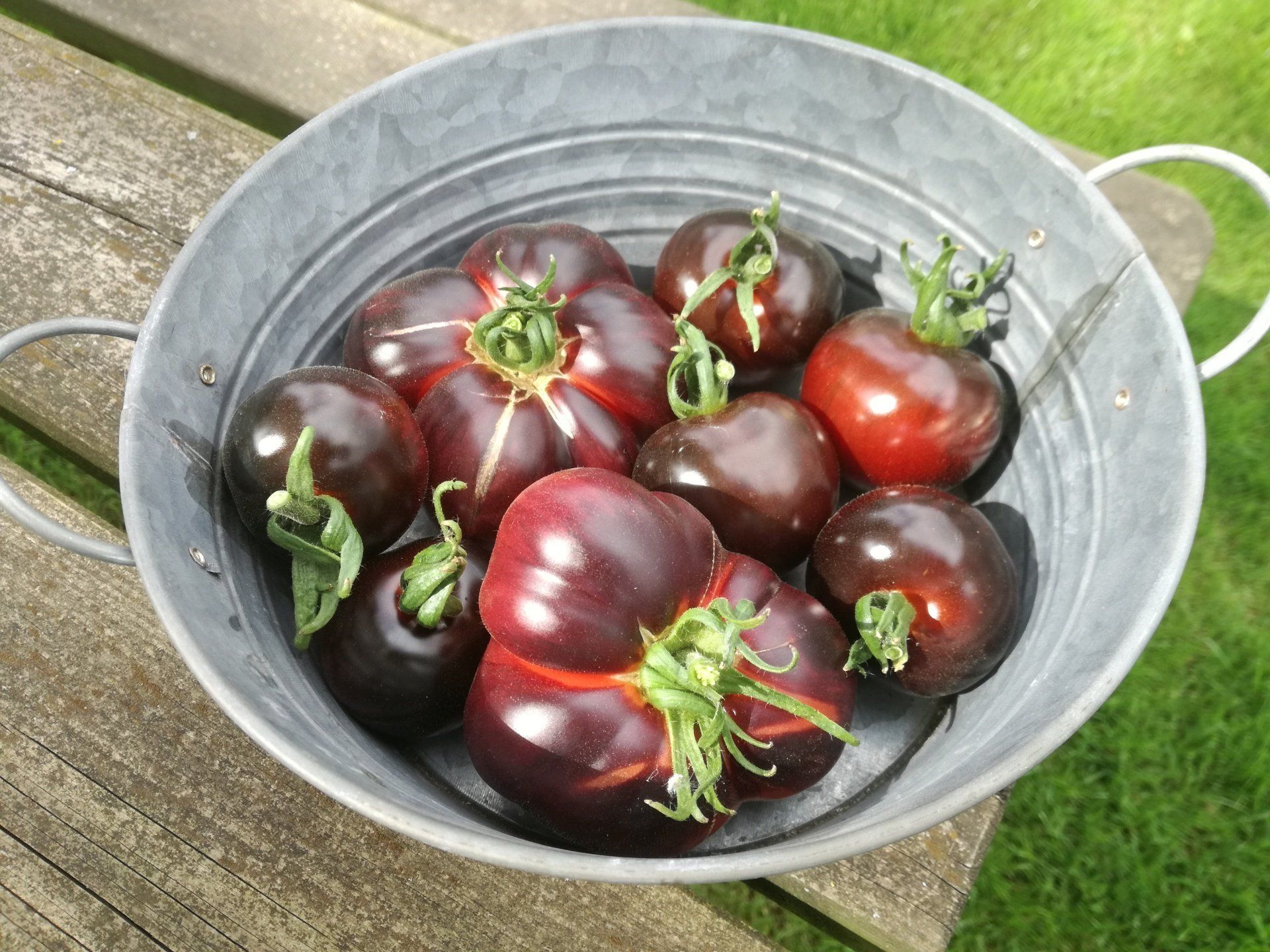
After this week they will be ready for their final place.Then give them lots of love and attention, and in a few months you can harvest delicious tomatoes! 😋
Order young vegetable plants!
Does sowing tomatoes seem like too much hassle? We at Farmzy love sowing tomatoes and are happy to do it for you. 😊 You can easily order young tomato plants and vegetable seedlings online in our webshop!

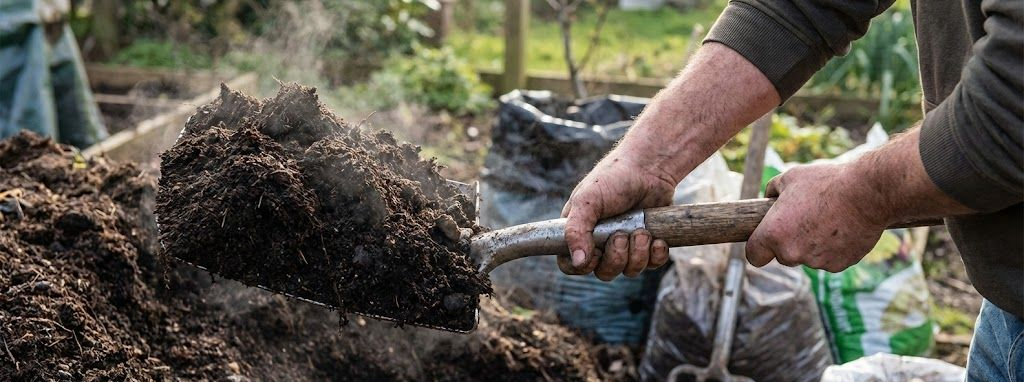
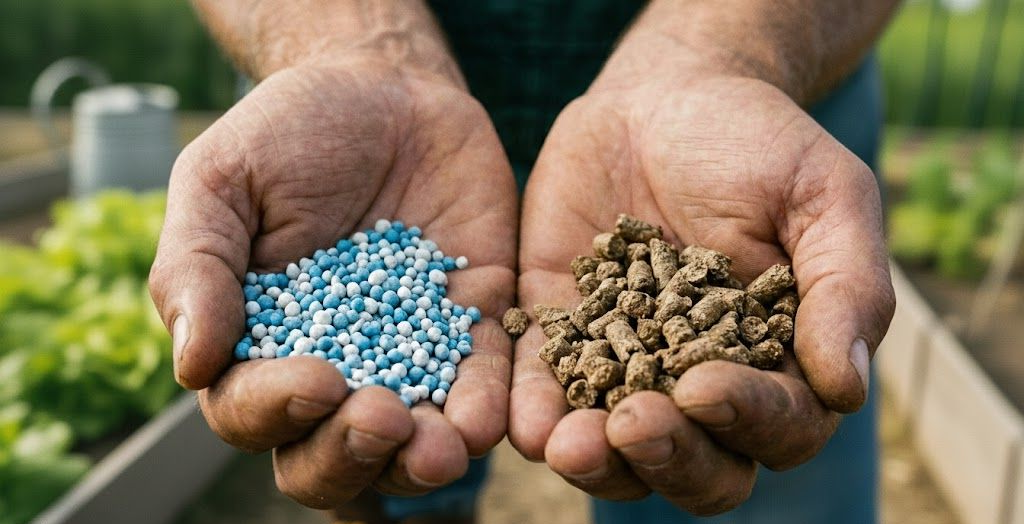
Artificial fertilizer or organic fertilizer?
What is the difference and which do I choose?
Other frequently asked questions about:
Growing young tomato plants
Why are my tomato plants growing so tall and thin (scraggy)?
Once the tomato seeds have germinated by half and are above the vermiculiteor seed soil
To germinate, you should move them to a room with direct sunlight and a temperature of about 16 degrees Celsius. If the young tomato plants are too dark and too warm, they will grow tall, thin, and limp.
When should I transplant (repot) young tomato plants?
Do this as soon as they start to crowd each other in the seed tray. I usually do this when the tomato plants are about 5 cm tall.
How deep should I plant tomato plants when repotting?
Plant the young tomato plants
Plant them in the ground up to the first (seed) leaves. This will give them a firm footing.
Which potting soil or sowing soil is best for young tomato plants?
Seed soil doesn't contain enough nutrients for the stage your young tomato plants are currently in. Use a good potting soil that's already fertilized. Tomato plants need plenty of nutrients to develop healthily and strongly.
Also read:
How to fertilize tomatoes?
How often should I water young tomato plants?
Immediately after potting, thoroughly moisten the soil. Allow the plants to absorb as much moisture as possible from the soil. Only give them another good watering when the soil feels dry.
Always give potted tomato plants plant food
along with the watering.
Also read:
Watering tomato plants?
Do young tomato plants need extra nutrition?
Yes, always give after potting liquid food
Take this into account when watering. Tomato plants are hungry plants and need the extra nutrients to produce a strong stem and healthy leaves.